
When a loved one begins receiving hospice care at home, families often wonder what they need to do to prepare. You may be thinking about medical equipment, medications, safety, visitors, or simply how to make the space more comfortable.
The good news is that you do not have to turn your home into a hospital. Hospice care is designed to support comfort and quality of life wherever a patient calls home. A few thoughtful changes can help make everyday care easier for the patient, family caregivers, and hospice team.
Start With Comfort, Not Perfection
There is no single correct way to set up a home for hospice care. Every person’s needs, abilities, and living situation are different.
Instead of trying to reorganize the entire house at once, focus first on the areas that will have the greatest impact on comfort and safety.
Think about:
- Where your loved one is most comfortable spending time
- How easily they can get to a bathroom
- Whether there is room for needed medical equipment
- How caregivers can safely assist with movement and personal care
- Whether the patient can easily reach important everyday items
Choose a Comfortable Main Care Area
Some patients prefer to remain in their bedroom, while others may want to spend most of the day in a living room or another familiar part of the home.
When choosing a primary care area, consider a space with:
- Enough room for caregivers to move comfortably
- Easy access to a bathroom, if possible
- Good lighting
- Nearby electrical outlets
- Space for medical equipment or supplies
- A chair for family members and visitors
- A calm and familiar atmosphere
If stairs have become difficult, it may make sense to create a temporary sleeping area on the main floor.
Make Frequently Used Items Easy to Reach
Keeping essentials nearby can reduce unnecessary movement and make caregiving tasks easier.
You may want to create a small bedside or nearby area for items such as:
- Water or approved beverages
- Tissues
- Lip balm
- Glasses
- Hearing aids
- Phone and charger
- Television remote
- Books or magazines
- Personal care items
Keep medications and medical supplies organized separately and follow the hospice team’s instructions for storing them safely.
Reduce Fall Risks Around the Home
Serious illness, medications, weakness, and changes in balance can increase the risk of falls.
A quick home safety check can help identify potential hazards.
- Remove loose rugs or secure them firmly
- Clear cords and clutter from walking paths
- Make sure hallways and stairways are well lit
- Keep commonly used items within easy reach
- Avoid furniture arrangements that create narrow walkways
- Use assistive devices recommended by the care team
Ask the hospice team before making major changes. They may be able to identify simple ways to make movement and caregiving safer.
Prepare for Medical Equipment
Depending on the patient’s needs, hospice care may involve durable medical equipment designed to improve comfort or safety.
Equipment might include:
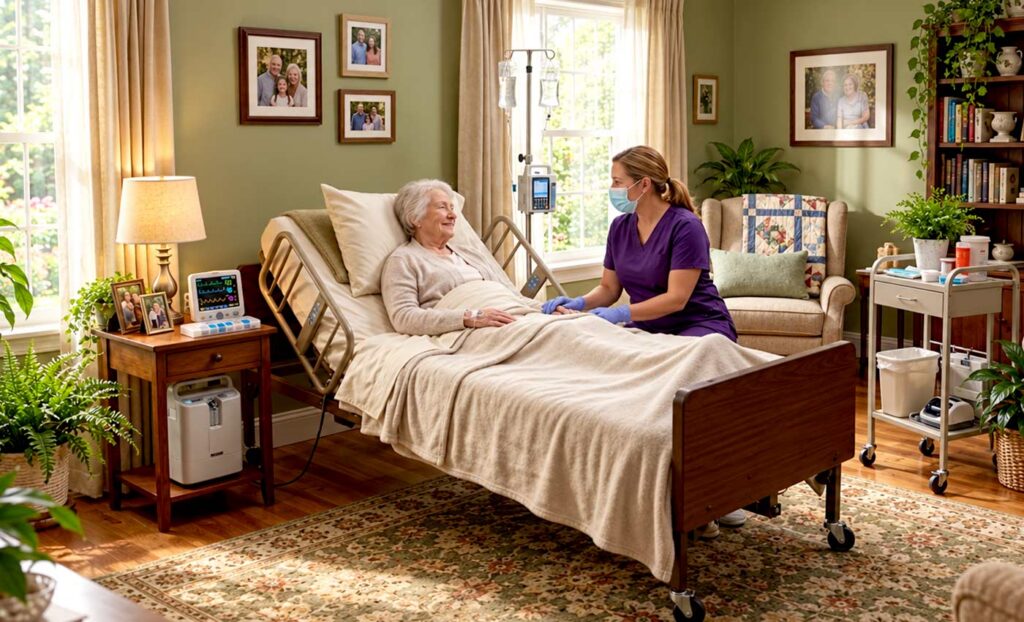
- A hospital bed
- Wheelchair
- Walker
- Bedside commode
- Oxygen equipment
- Pressure-relieving mattress or cushions
- Other equipment related to the patient’s care plan
Transitions LifeCare’s hospice team assesses each patient’s individual needs. Durable medical equipment related to the terminal illness is generally included as part of the hospice benefit.
Before equipment arrives, you may need to move a small amount of furniture to create enough room for safe access.
Organize Medications and Care Information
Once hospice begins, there may be new medications, instructions, phone numbers, and care information to keep track of.
Consider keeping one dedicated folder, notebook, or binder that contains:
- An updated medication list
- Hospice contact information
- Instructions from the care team
- Important medical information
- Advance directives
- Emergency contact information
- Questions to discuss at the next visit
Keep this information in a location that primary caregivers can easily access.
Know Who to Call When Something Changes
One of the most important parts of preparing for hospice care at home is knowing how to reach the hospice team.
Families may feel uncertain when symptoms change, especially at night or on weekends. Keep the hospice phone number somewhere obvious and make sure everyone involved in caregiving knows where to find it.
Transitions LifeCare provides hospice support 24 hours a day, seven days a week, including holidays.
Contact the hospice team when you have concerns about symptoms, medications, comfort, or changes in the patient’s condition. They can help determine what steps are appropriate.
Create a Calm and Familiar Environment
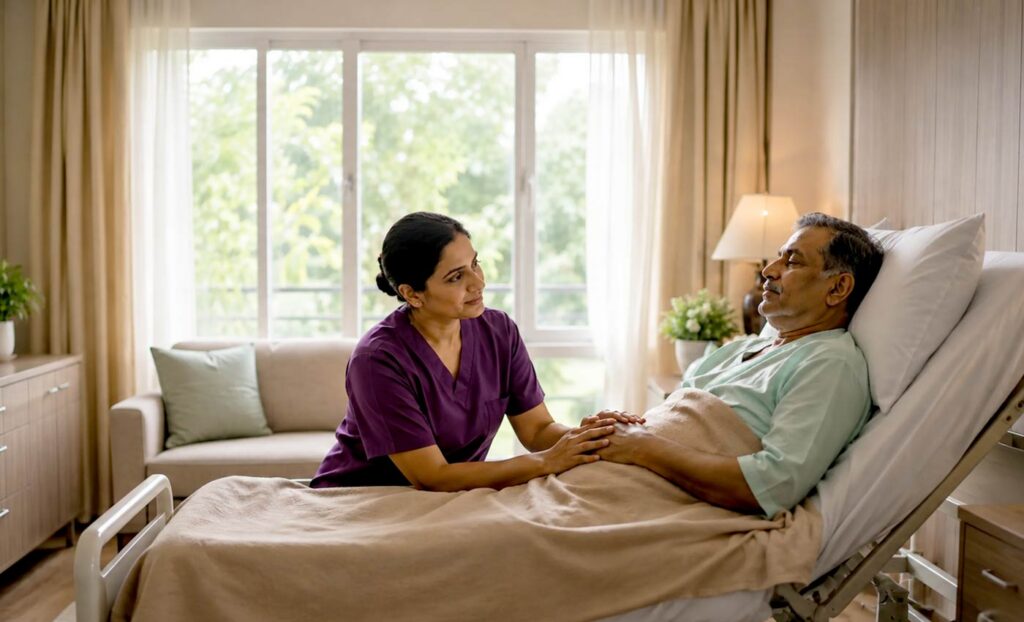
Medical equipment may become part of the room, but the space can still feel like home.
Consider surrounding your loved one with familiar and comforting things such as:
- Family photographs
- A favorite blanket
- Artwork
- Plants or flowers
- Favorite music
- Books
- Meaningful keepsakes
Small details can help a room feel personal rather than clinical.
Think About Lighting and Noise
Comfort can change throughout the course of an illness. Some patients become more sensitive to bright lights, loud televisions, or frequent activity.
Adjust the environment according to what feels best for your loved one.
You might:
- Use lamps instead of harsh overhead lighting
- Open curtains during the day for natural light
- Keep nighttime pathways softly illuminated
- Lower television or music volume when the patient is resting
- Give the patient quiet time between visitors
Plan for Visitors
Friends and family members may want to visit once hospice care begins. Those visits can be meaningful, but too many people at once can also become tiring.
Ask the patient what they prefer whenever possible.
It may help to:
- Schedule shorter visits
- Limit the number of visitors at one time
- Ask visitors to call before coming
- Allow the patient to cancel visits when they are tired
- Create quiet periods during the day for rest
Visitors can also help caregivers by bringing meals, picking up groceries, or handling small household tasks.
Create Space for the Caregiver, Too
When preparing the home, it is easy to focus entirely on the patient. But family caregivers also need a comfortable and functional environment.
Consider having:
- A comfortable chair near the patient
- A place to charge a phone
- Water and snacks nearby
- A designated location for care supplies
- A place where the caregiver can rest when someone else is present
Caregiving can be physically and emotionally demanding. Making small accommodations for the caregiver can make daily responsibilities more manageable.
Let the Hospice Team Guide You
You do not need to anticipate every possible need before hospice begins.
The hospice team can assess the patient’s condition and home environment and help determine what equipment, medications, supplies, and additional support may be appropriate.
At Transitions LifeCare, the hospice care team may include nurses, physicians, hospice aides, social workers, spiritual care counselors, and trained volunteers who coordinate care around the patient and family.
Ask questions whenever something feels confusing or difficult. Supporting family caregivers is part of hospice care, too.
Remember That Home Should Still Feel Like Home
Preparing for hospice care does not mean removing everything familiar from the patient’s surroundings.
In fact, one of the benefits of receiving hospice care at home is the opportunity to remain surrounded by familiar people, routines, belongings, and memories.
Make the changes that help with safety and comfort, but keep the things that make the space feel personal.
Hospice Care at Home With Transitions LifeCare
Transitions LifeCare provides hospice care focused on comfort, dignity, symptom management, and quality of life. Hospice is often provided in the patient’s own home, with an interdisciplinary care team supporting both patients and their families.
If a patient’s needs change and care at home is no longer appropriate, the William M. Dunlap Center for Caring Hospice Home in Raleigh provides additional levels of hospice care, including general inpatient, respite, and short-term routine care.
To learn more about receiving hospice care at home, visit the Hospice Care page or call 919-828-0890.