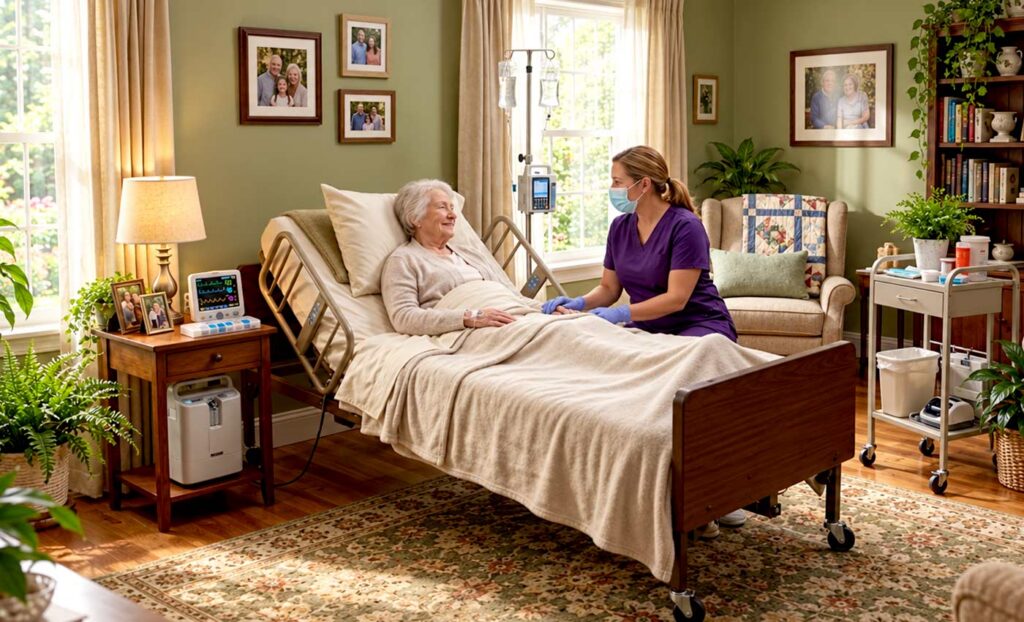

Hospice care is often misunderstood. For many families, the word “hospice” can bring up fear, uncertainty, or the assumption that choosing hospice means there are no options left.
In reality, hospice is designed to help people with life-limiting illnesses live as fully and comfortably as possible while supporting the people who care about them. Understanding what hospice does — and what it does not mean — can make it easier for families to make informed decisions about care.
Here are some common hospice myths and the facts families should know.
Myth: Hospice Means Giving Up
Fact: Hospice shifts the focus of care toward comfort, quality of life, and symptom management.
Patients who elect hospice care choose a comfort-directed plan rather than treatment intended to cure the underlying terminal illness. That does not mean care stops. Instead, the type of care changes.
The hospice team focuses on helping manage symptoms, maintain comfort, support the patient’s wishes, and provide emotional, practical, and spiritual support to both the patient and family.
At Transitions LifeCare, hospice care is centered on comfort, dignity, and quality of life, with an interdisciplinary team working together to support patients and families throughout the experience.
Myth: Hospice Is Only for the Last Few Days of Life
Fact: Hospice care can continue as long as a patient remains clinically eligible for hospice services.
Families sometimes wait until the final days of life to contact hospice because they believe hospice is only intended for the very end. However, there is no fixed number of days a person can receive hospice care as long as they continue to meet clinical eligibility requirements.
Receiving hospice support earlier may give patients and families more time to benefit from services such as:
- Pain and symptom management
- Nursing support
- Personal care assistance
- Social work support
- Spiritual care
- Caregiver education and guidance
- Volunteer support
If you are wondering whether hospice may be appropriate, talking with your physician or contacting a hospice provider can help you better understand your options.
Myth: You Have to Give Up Your Doctor
Fact: Patients can continue working with their existing physician while receiving hospice care.
At Transitions LifeCare, the hospice team collaborates with a patient’s doctor as part of the overall plan of care. If a patient does not have a primary care physician, Transitions LifeCare can also provide a physician to support their hospice care.
This collaborative approach allows the hospice team and the patient’s existing medical providers to work together around the patient’s needs and wishes.
Myth: Hospice Is a Place You Go
Fact: Hospice is a type of care that can be provided wherever a patient calls home.
Many people receive hospice care in their own homes. Hospice services can also support patients living in:
- Assisted living communities
- Skilled nursing facilities
- Long-term care facilities
- Continuing care communities
For patients living in nursing or long-term care facilities, hospice works alongside the care already being provided through a coordinated plan of care.
Transitions LifeCare also operates the William M. Dunlap Center for Caring, a 30-bed Hospice Home in Raleigh. The Hospice Home provides general inpatient, respite, and short-term routine care when remaining at home is not possible or when another level of support is needed.
Myth: Hospice Patients Can No Longer Take Medication
Fact: Medications are reviewed individually based on their effectiveness and contribution to the patient’s quality of life.
A hospice care team does not simply discontinue all medications when a patient begins hospice.
Instead, the team reviews medications to determine whether they continue to support the patient’s comfort and quality of life. Medications related to the patient’s terminal illness are covered under the hospice benefit.
If you have questions about a particular medication, talk with the hospice care team before making any changes.
Myth: Hospice Means No More Treatment of Any Kind
Fact: Hospice continues to provide active medical care focused on comfort and quality of life.
Hospice patients may receive medications, nursing care, medical equipment, symptom management, and other services that support comfort and safety.
In some circumstances, limited therapy services may also be covered through the hospice benefit when they contribute to the patient’s quality of life or safety in the home.
The important distinction is that the hospice plan of care is focused on comfort rather than treatment intended to cure the terminal illness.
Myth: Hospice and Palliative Care Are the Same Thing
Fact: Hospice and palliative care share a focus on comfort and quality of life, but they are not the same type of care.
Palliative care can be provided at any stage of a serious or life-limiting illness. Patients receiving Transitions PalliativeCare can continue seeing their physicians, receiving treatment, and using other healthcare services while also receiving an additional layer of support.
Palliative care can help with symptoms such as:
- Pain
- Shortness of breath
- Anxiety or depression
- Loss of appetite
- Agitation
Hospice care is intended for patients who have chosen a comfort-directed plan of care for a terminal illness. Both approaches prioritize quality of life, but eligibility and treatment goals differ.
Myth: Hospice Is Only About Medical Care
Fact: Hospice supports the emotional, social, spiritual, and practical needs of patients and families as well.
Transitions HospiceCare uses an interdisciplinary team approach. Depending on a patient’s needs, the care team may include:
- Physicians
- Nurses
- Social workers
- Spiritual care counselors
- Hospice aides
- Trained volunteers
These team members work together to provide medical care as well as emotional support, spiritual guidance, and practical assistance.
Myth: Hospice Is Only for the Patient
Fact: Hospice care also provides support for family members and caregivers.
Serious illness affects the entire family. Caregivers may be managing medications, personal care, appointments, changing symptoms, household responsibilities, and their own emotions at the same time.
Hospice team members can help caregivers understand what to expect, learn how to provide care safely, access helpful resources, and navigate difficult changes.
Transitions LifeCare also offers caregiver resources and education designed to help family and professional caregivers manage daily challenges and care for their own well-being.
Myth: Hospice Is Too Expensive for Many Families
Fact: Hospice care is covered by Medicare, Medicaid, and most major insurance companies and managed care providers.
At Transitions LifeCare, hospice coverage includes medications related to the terminal illness as well as durable medical equipment needs associated with hospice care.
Transitions LifeCare is also a nonprofit organization and accepts patients regardless of their ability to pay.
If you are unsure what your insurance covers, the hospice team can help you understand your benefits and available options.
Myth: You Cannot Receive Hospice in a Nursing Home or Assisted Living Community
Fact: Hospice services can be provided in many residential care settings.
Patients living in a nursing facility, long-term care facility, or other residential setting can receive specialized hospice visits from nurses, hospice aides, social workers, spiritual care counselors, and volunteers.
Hospice does not replace the services already provided by the facility. Instead, the hospice team supplements that care through a coordinated plan focused on the patient’s comfort and goals.
Myth: Once You Choose Hospice, You Can Never Leave
Fact: A patient may leave hospice if they no longer qualify for the benefit, and they may be able to return later if their condition changes.
Sometimes a patient’s health improves enough that hospice care is no longer medically appropriate. In that situation, the patient may be discharged from hospice.
If the illness later progresses and the patient again meets hospice eligibility requirements, they may return to Transitions HospiceCare with a physician’s order.
Myth: Families Have to Handle Everything on Their Own Between Hospice Visits
Fact: Hospice support is available beyond scheduled visits.
Transitions LifeCare is available 24 hours a day, seven days a week, including holidays. Families can contact the team when they have questions, need help understanding a change in their loved one’s condition, or need guidance about what to do next.
You do not have to wait until a situation becomes a crisis before reaching out.
Getting the Facts Can Make Hospice Feel Less Overwhelming
It is normal to have questions or mixed feelings when hospice enters the conversation. Many misconceptions come from limited experience with hospice or from seeing someone receive hospice only during the final days of life.
Learning what hospice actually provides can help families approach the decision with a clearer understanding of their choices.
Hospice is not about removing care. It is about providing a different kind of care — one centered on comfort, dignity, quality of life, and the needs and wishes of the patient and family.
If you are unsure whether hospice care is appropriate for you or someone you love, Transitions LifeCare can help you understand your options. The team is available 24 hours a day, seven days a week, including holidays, to answer questions and help families take the next step when they are ready.