
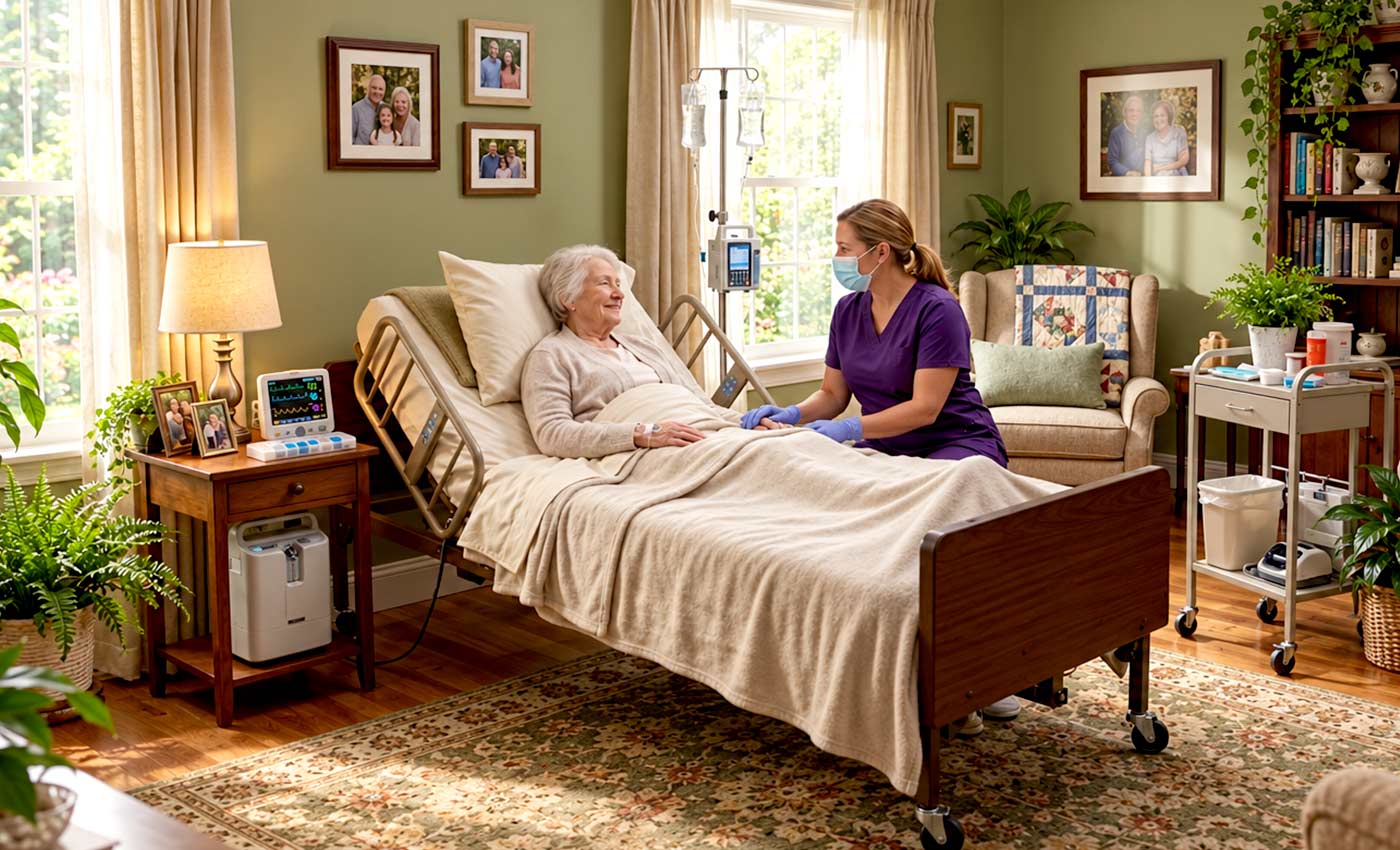
For many people receiving hospice care, home is where they feel most comfortable. Familiar surroundings, favorite belongings, family members, pets, and daily routines can all provide a sense of reassurance during an uncertain time.
But when hospice care begins at home, families often wonder what they need to do to prepare. Do you need to rearrange the house? What supplies should you have nearby? How should medications be organized? And what happens if your loved one’s needs suddenly change?
The good news is that you do not have to transform your home into a medical facility. A few practical preparations can make caregiving easier while helping create a safe, comfortable environment for your loved one.
Start With Comfort, Not Perfection
There is no perfect way to set up a home for hospice care. Every patient, family, and living space is different.
Begin by thinking about where your loved one is most comfortable and what will make daily care easier. Depending on their needs, that may be a bedroom, living room, or another familiar space where family members can easily spend time together.
When choosing the primary care area, consider:
- Easy access to a bathroom, if possible
- Enough room for caregivers to move around safely
- Comfortable lighting
- Access to electrical outlets for medical equipment
- A place to keep medications and commonly used supplies
- Space for family and friends to visit without overwhelming the patient
Most importantly, try to preserve the things that make the space feel like home.
Make the Main Care Area Easy to Navigate
As illness progresses, mobility can change. A person who is able to walk independently today may need additional assistance later.
Small adjustments can reduce fall risks and make it easier for caregivers and healthcare professionals to provide assistance.
Consider:
- Removing loose rugs or other tripping hazards
- Clearing pathways around the bed, chair, and bathroom
- Moving frequently used items within easy reach
- Using nightlights in hallways and bathrooms
- Making space for a walker, wheelchair, or other equipment if needed
- Keeping cords safely out of walkways
Your hospice team can help you determine whether additional equipment or home modifications may be helpful.
Keep Important Information in One Place
Hospice care often involves several members of an interdisciplinary team. Transitions HospiceCare may include physicians, nurses, social workers, spiritual care counselors, hospice aides, and trained volunteers working together to support patients and families.
Keeping important information together can make communication easier, particularly when more than one family member is helping provide care.
Consider creating a folder, notebook, or binder that includes:
- Hospice contact information
- A current medication list
- Emergency contacts
- Names of physicians and other healthcare providers
- Important medical documents
- Notes or instructions from the hospice team
- A list of questions you want to ask during the next visit
Keep the information somewhere caregivers can access it easily while still protecting sensitive medical and personal information.
Organize Medications
Medication management may become an important part of caring for someone receiving hospice services.
The hospice care team reviews medications and helps determine which medications continue to support the patient’s comfort and quality of life. Medications related to the terminal illness are covered under the hospice benefit.
To make medication management easier:
- Keep medications together in a consistent location
- Keep an updated medication list
- Follow the care team’s instructions for timing and dosage
- Do not change or discontinue medications without discussing it with the care team
- Write down questions or concerns about side effects
- Ask what to do if your loved one has difficulty swallowing medication
If you are ever unsure about how or when to give a medication, contact the hospice team for guidance.
Know Where Medical Equipment Will Go
Depending on the patient’s needs, hospice care may involve durable medical equipment such as a hospital bed, wheelchair, bedside commode, oxygen equipment, or other supportive devices.
Hospice-related durable medical equipment is generally included as part of the hospice benefit when it is needed for the patient’s terminal illness and plan of care.
You do not need to decide on your own what equipment your loved one needs. The care team will help assess those needs.
If equipment is being delivered, however, it can help to identify a clear space ahead of time. Ask your hospice team how much room the equipment requires and whether access to an outlet or another part of the home is necessary.
Create a Small Caregiving Station
Keeping frequently used items nearby can save caregivers from repeatedly searching through drawers or walking across the house.
A bedside basket, rolling cart, or small table might contain items such as:
- Tissues
- Lip balm
- Hand sanitizer
- Disposable gloves, if recommended
- Notepad and pen
- Phone charger
- Water or other permitted drinks
- Personal care items
- Comfort items your loved one uses regularly
Your hospice team can recommend additional supplies based on your loved one’s individual needs.
Think About What Makes Your Loved One Feel Comfortable
Comfort is about more than managing physical symptoms.
Familiar surroundings and small personal details can make a meaningful difference. Depending on your loved one’s preferences, you might include:
- Favorite blankets or pillows
- Family photographs
- Favorite music
- Books or television programs they enjoy
- Meaningful religious or spiritual items
- Flowers or other familiar decorations
- Visits from a beloved pet
Some people enjoy being surrounded by family, while others may prefer a quieter environment. Pay attention to what feels comforting to the person receiving care rather than what others think the room should look like.
Plan How Family and Friends Can Help
When someone begins hospice care, friends and extended family often ask what they can do.
Instead of trying to handle every responsibility yourself, consider giving people specific tasks.
They might help by:
- Preparing or delivering meals
- Picking up groceries
- Caring for pets
- Doing laundry or household chores
- Sitting with your loved one while you rest
- Providing transportation
- Helping communicate updates to extended family
- Running errands
Even relatively small tasks can give primary caregivers more time to rest or simply be present with their loved one.
Talk About Visitors
Visits can provide companionship and connection, but they can also become tiring for someone who is seriously ill.
Talk with your loved one, when possible, about who they want to see and how long visits should last.
Families may find it helpful to:
- Limit the number of visitors at one time
- Schedule visits during times when the patient usually has more energy
- Encourage visitors to keep conversations calm and flexible
- Let visitors know that plans may change depending on how the patient feels
- Ask anyone who is sick to postpone their visit
It is okay to protect your loved one’s rest, even when well-meaning friends and family want to visit.
Prepare for Changes in Care Needs
A person’s needs can change during hospice care. Symptoms may change, mobility may decrease, or caregivers may find that tasks that were once manageable have become more difficult.
You are not expected to anticipate every change on your own.
Your hospice team can evaluate new symptoms, adjust the plan of care, recommend equipment, provide education, and help you determine what additional support may be needed.
Transitions LifeCare provides hospice support 24 hours a day, seven days a week, including holidays.
Know When to Call the Hospice Team
One of the most important preparations is simply knowing whom to call when you have a question or something changes.
Contact your hospice team when:
- Your loved one develops a new or worsening symptom
- Pain or other symptoms are not adequately controlled
- You are unsure how to give a medication
- Your loved one falls
- You notice significant changes in breathing, alertness, or behavior
- Medical equipment is not working properly
- You feel overwhelmed or uncertain about what to do next
You do not have to wait until a situation feels like an emergency to call. Questions and changes are part of caregiving, and the hospice team is there to provide guidance.
Take Care of the Caregiver, Too
Preparing the home for hospice should also include thinking about the needs of the people providing care.
Caregivers need sleep, meals, breaks, and emotional support. Trying to stay constantly available can quickly lead to exhaustion.
Whenever possible:
- Create a schedule with other family members or friends
- Accept offers of practical help
- Keep meals and snacks available for yourself
- Rest when someone else can safely stay with your loved one
- Talk with your hospice social worker or care team when caregiving feels overwhelming
Caring for yourself helps you remain present for the person you are supporting.
You Don’t Have to Have Everything Figured Out
Families sometimes feel pressure to know exactly how to care for someone once hospice begins. That is not the expectation.
Hospice is built around a team approach. Transitions HospiceCare works with patients and families to develop a plan based on the patient’s needs, wishes, home environment, and goals of care. The care team coordinates around the patient and family while providing medical, emotional, spiritual, and practical support.
Preparing your home can make daily care easier, but you do not need to prepare for every possibility before hospice begins. Start with the basics, ask questions as they come up, and allow your hospice team to help you adjust as your loved one’s needs change.