

Families often report wishing their loved one had entered hospice care sooner. Hospice provides much more than support during a person’s final days; it offers an interdisciplinary circle of care that can help patients manage symptoms, remain comfortable, and experience the greatest possible quality of life.
Referring a patient earlier gives the hospice team more time to understand the patient’s goals, manage changing needs, prepare caregivers, and provide meaningful support to the entire family.

Understanding Hospice Length of Stay
According to the CMS claims data cited in the Transitions LifeCare Average Length of Stay flyer, patients within the Transitions LifeCare service area had an average hospice length of stay of 68 days in 2021.
The flyer compares this with a referenced national average of 92.6 days for Medicare hospice patients in 2019. Although these figures come from different reporting years, they illustrate an important point: many patients and families may not be receiving the full benefit of hospice care for as long as they could.
Why Earlier Hospice Referrals Matter
An earlier referral allows the hospice team to begin providing care before symptoms or caregiver needs develop into a crisis. Potential benefits include:
- Helping patients manage pain and other distressing symptoms
- Reducing avoidable emergency department visits and hospital readmissions
- Providing guidance before an urgent care situation develops
- Helping patients express their goals, needs, and care preferences
- Giving caregivers practical education and ongoing support
- Connecting families with social work and spiritual care resources
- Allowing patients and families more time to build trusting relationships with their care team
- Providing grief support before and after a death
Hospice Is More Than Care During the Final Days
Hospice care is intended for people with a life-limiting illness who have chosen a comfort-directed plan of care rather than curative treatment. A patient may receive hospice services for months as long as they continue to meet the clinical eligibility requirements.
The Transitions HospiceCare team may include:
- Physicians and nurses
- Hospice aides
- Social workers
- Spiritual care counselors
- Grief counselors
- Trained volunteers
Together, these professionals address the patient’s physical, emotional, social, and spiritual needs while also supporting family members and caregivers.
When Should Hospice Be Considered?
A hospice conversation may be appropriate when a patient:
- Has a serious illness that continues to progress
- Is no longer benefiting from or pursuing curative treatment
- Experiences frequent hospitalizations or emergency department visits
- Has increasing pain, shortness of breath, weakness, or other difficult symptoms
- Needs more assistance with eating, bathing, dressing, walking, or other daily activities
- Is losing weight or experiencing a significant decline in appetite
- Wants care focused on comfort and quality of life
- Has a caregiver who is overwhelmed or needs additional support
A referral does not automatically enroll someone in hospice. It begins a conversation and allows the hospice team to assess the patient’s needs, explain available services, and determine whether hospice care is appropriate.
Benefits for Healthcare Providers and Communities
Timely hospice referrals can also support hospitals, medical practices, long-term care communities, and other healthcare partners. Earlier involvement may help:
- Reduce potentially avoidable hospital readmissions
- Improve coordination among patients, families, and healthcare providers
- Prevent care decisions from being made during a crisis
- Ensure that patients receive care aligned with their goals
- Provide families with education and resources before needs become urgent
Serving Patients and Families Across the Triangle
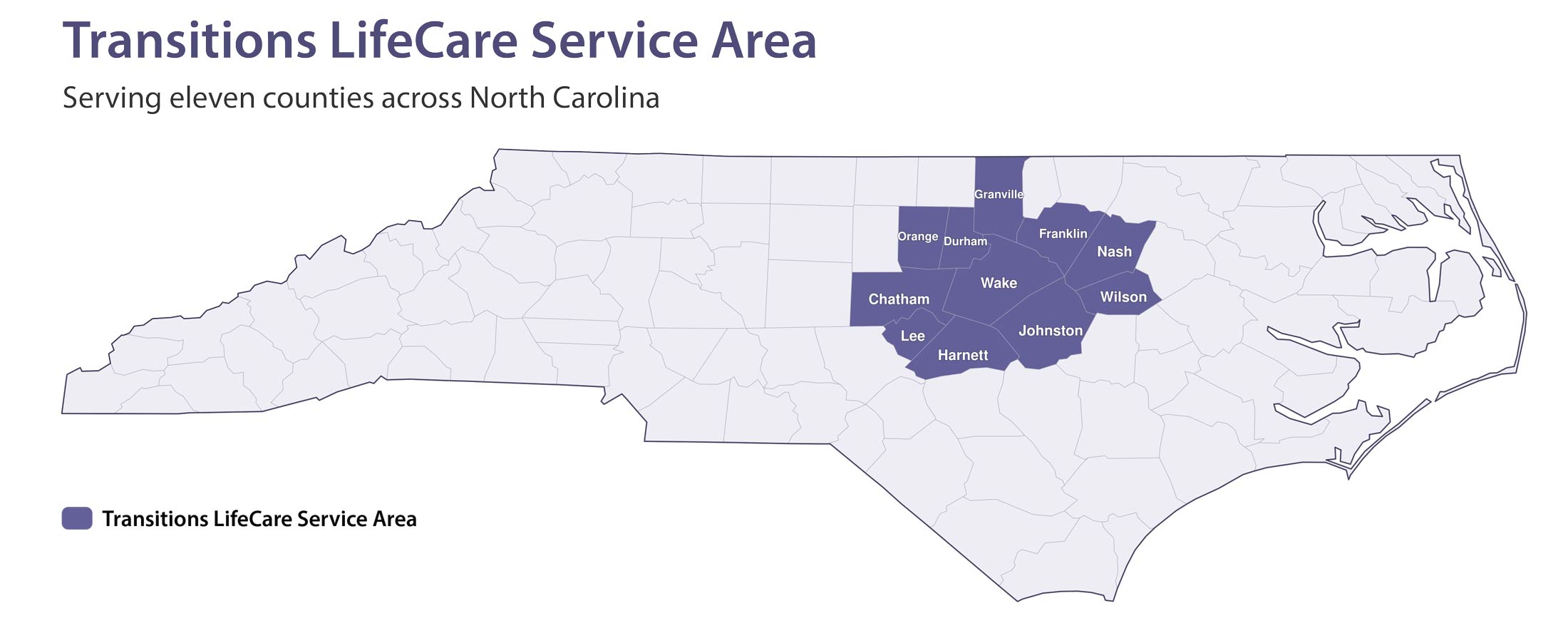
Transitions LifeCare provides hospice and other supportive services in the following North Carolina counties:
- Chatham County
- Durham County
- Franklin County
- Granville County
- Harnett County
- Johnston County
- Orange County
- Wake County
- Lee County
In addition to hospice care, Transitions LifeCare offers a continuum of support that includes:
Don’t Wait to Begin the Conversation
Hospice is most helpful when patients and families have enough time to benefit from its full range of services. Beginning the conversation early can help prevent crisis-driven decisions and ensure that support is available when it is needed most.
Healthcare professionals, patients, and family members can submit a referral through the Transitions LifeCare referral page.
- Phone: 919.828.0890
- Toll-free: 888.900.3959
- Referral fax: 919.828.9514
Transitions LifeCare has served the community since 1979, helping patients and families navigate the end of life and life-changing illness with compassion, support, and expertise.