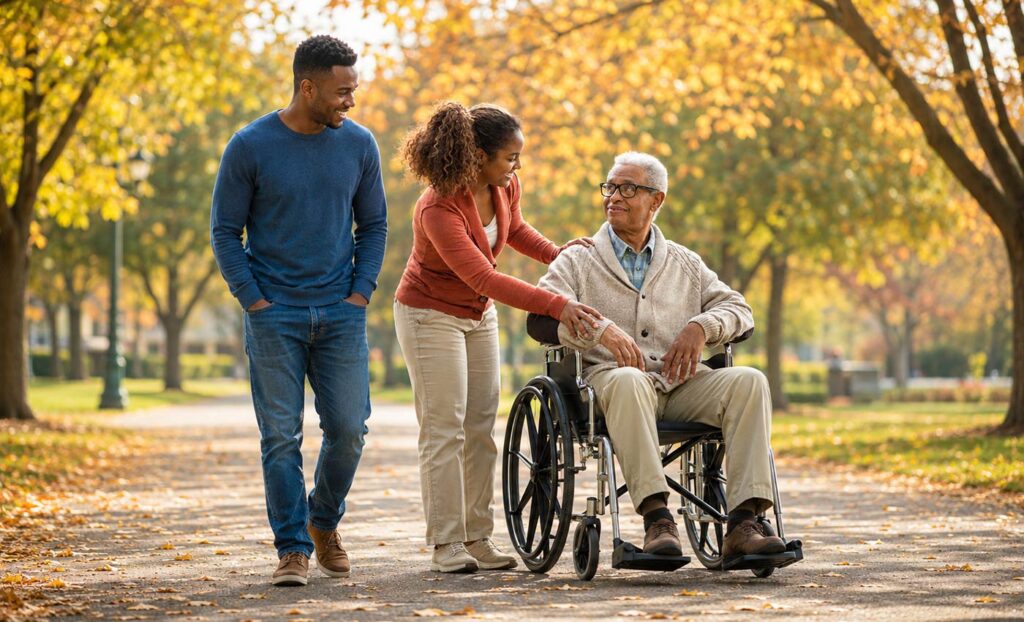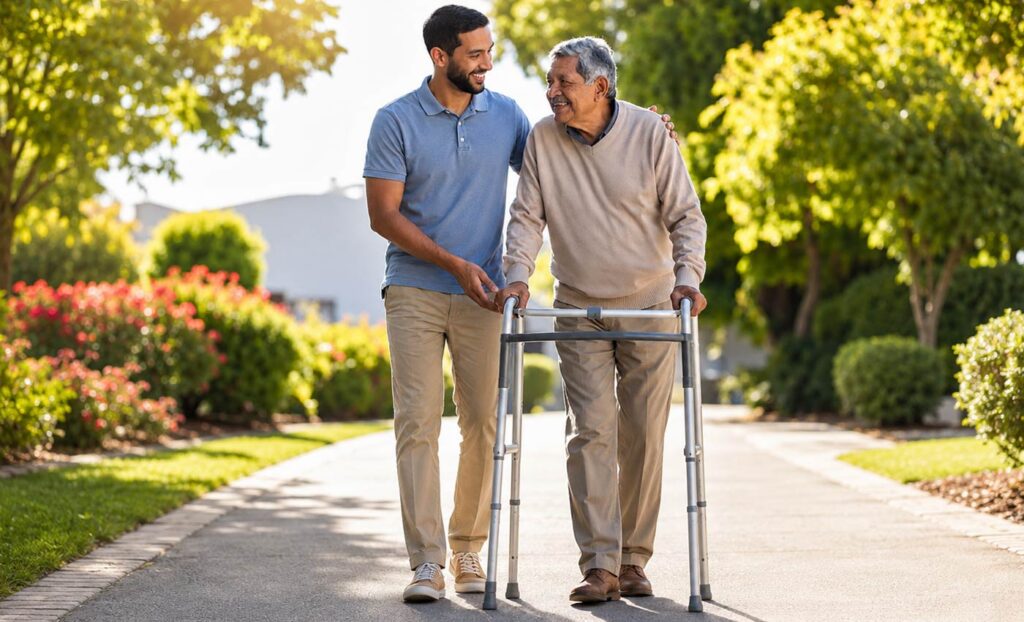
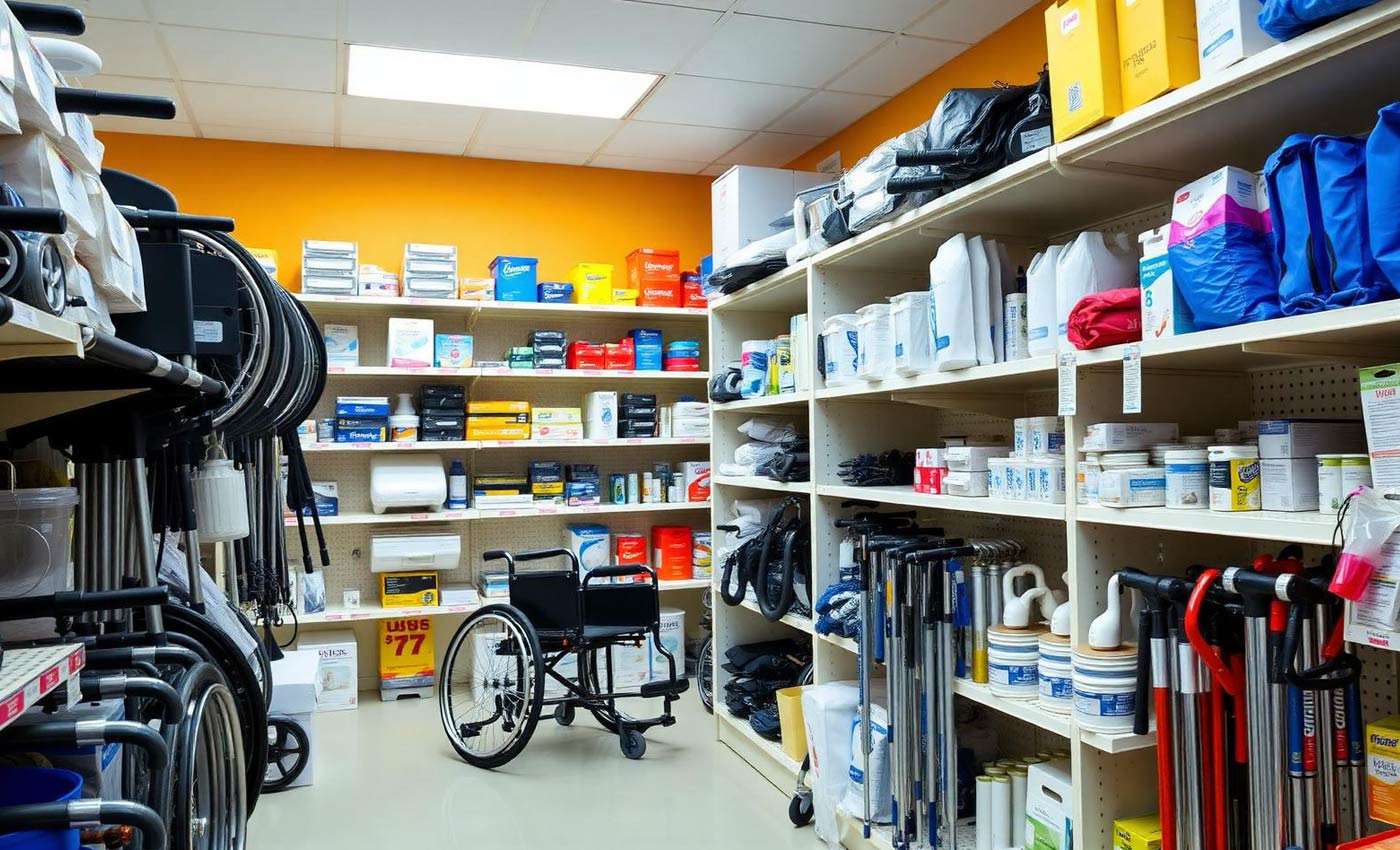
Wheelchairs, walkers, shower chairs, and other medical equipment can remain useful long after the original owner no longer needs them. Donating these items can help another person maintain mobility, recover safely at home, and avoid the cost of purchasing equipment for a short-term need.
Donation requirements vary by organization, and available storage space can change quickly. Before loading or transporting an item, contact the organization to confirm that it is currently accepting the equipment or supplies you have.
What Is Durable Medical Equipment?
Durable medical equipment, commonly called DME, includes reusable equipment designed to support a person’s health, safety, mobility, or daily activities at home.
Common examples include:
- Manual and power wheelchairs
- Walkers and rollators
- Canes and crutches
- Knee scooters and mobility scooters
- Shower chairs and tub-transfer benches
- Bedside commodes and raised toilet seats
- Patient lifts and transfer aids
- Hospital beds and overbed tables
- Lift chairs
- Portable wheelchair ramps
- Blood pressure monitors
- CPAP machines and certain respiratory equipment
Before Donating Medical Equipment
Taking a few steps before contacting a donation program can make it easier for the organization to evaluate your item.
- Confirm that you own it. Equipment rented through Medicare, Medicaid, private insurance, hospice, or a medical-equipment supplier may need to be returned rather than donated.
- Check its condition. Equipment should generally be safe, functional, and free from rust, cracks, odors, or missing structural parts.
- Clean the item. Follow the manufacturer’s cleaning instructions when available. Donation programs may perform additional sanitization before reuse.
- Gather the accessories. Include chargers, batteries, footrests, cushions, slings, manuals, cords, and other parts associated with the item.
- Record identifying information. The manufacturer, model, dimensions, weight capacity, approximate age, and serial number can help determine whether the equipment can be reused.
- Remove personal information. Take off prescription labels, delivery paperwork, patient names, and other identifying information.
- Take photographs. Some organizations will ask for pictures before approving a donation or scheduling a pickup.
Where to Donate Medical Equipment Near Raleigh
Bil’s Locker by Miracle Blue
Bil’s Locker is an Apex-based community medical-equipment program serving Raleigh, Durham, Apex, Cary, Morrisville, Holly Springs, Fuquay-Varina, and nearby areas. The program provides clean, functional equipment to people in need at no cost.
Its online donation form currently lists items such as:
- Canes, walking sticks, and crutches
- Walkers and wheelchairs
- Mobility and knee scooters
- Bathroom safety equipment
- Grab bars
- Hoyer lifts and stair chairs
- Oxygen equipment and CPAP machines
- Wound-care supplies
Drop-off is available in Apex, and pickup may be available depending on the item and location.
Submit an equipment donation request to Bil’s Locker
North Carolina Assistive Technology Program Exchange
The North Carolina Assistive Technology Program operates a statewide reuse and exchange service for assistive technology and durable medical equipment. Donors can submit an item for inclusion on the NCATP Exchange list, which connects people offering equipment with people who need it.
This may be especially helpful for specialized equipment that a local donation center cannot store.
Learn about the NCATP Reuse and Exchange program
For help submitting an item, call 919-855-3564.
Health Equipment Loan Program in Durham
The Health Equipment Loan Program, operated by Project Access of Durham County, collects gently used medical equipment, cleans and refurbishes it, and loans it to Durham County residents at no cost.
The program commonly works with equipment such as:
- Wheelchairs
- Walkers and canes
- Crutches
- Bedside commodes
- Shower chairs
- Tub-transfer benches
Although the program is located outside Wake County, it may be a convenient option for Raleigh residents who can transport equipment to Durham.
Phone: 919-748-1022
Email: help@projectaccessdurham.org
Location: 4206 N. Roxboro Street, Suite 100, Durham, NC 27704
Call before visiting to confirm current hours and donation needs.
Orange County Durable Medical Equipment Programs
Orange County Aging offers a donation and loan program for smaller DME as well as a connections program for larger equipment. Smaller accepted items may include rollators, shower chairs, transfer benches, and wide-base canes.
The connections program may help match donors and recipients for:
- Hospital beds
- Patient lifts
- Motorized scooters
- Lift chairs
Large equipment must generally be within the program’s designated service radius, and acceptance is not guaranteed.
Review Orange County’s current DME donation information or call the Aging Helpline at 919-968-2087.
North Carolina Baptist Aging Ministry
The North Carolina Baptist Aging Ministry helps churches and community groups operate durable medical-equipment ministries. Its regional staff may be able to identify a participating ministry with a current need for canes, walkers, rollators, wheelchairs, shower seats, or bedside commodes.
Contact the North Carolina Baptist Aging Ministry or call 877-506-2226.
Donating Unused Medical Supplies
Medical supplies are usually subject to stricter requirements than reusable equipment. Organizations commonly accept only supplies that are unopened, sealed, undamaged, and within their expiration dates.
Depending on current needs, accepted supplies may include:
- Wound dressings and bandages
- Disposable gloves and masks
- Ostomy supplies
- Incontinence supplies
- Unopened feeding supplies
- Unopened syringes without attached needles
- Disposable underpads
- Personal protective equipment
- Unopened respiratory or CPAP supplies
Do not assume that a clinic, hospital, or nonprofit can accept these items. Storage requirements, expiration dates, product recalls, infection-control policies, and state regulations affect what can be redistributed.
Contact a Free or Charitable Clinic
Some free clinics and permitted pharmacies participate in North Carolina’s Drug, Supplies, and Medical Device Repository Program. Eligible supplies and devices generally must remain in their original, unopened, sealed, tamper-evident packaging and must not be expired.
Use the North Carolina Association of Free and Charitable Clinics directory to locate clinics in Raleigh and Wake County. Contact the clinic before visiting to ask whether it participates in the repository program and whether it needs your specific supplies.
Items That May Not Be Accepted
Many donation programs cannot accept:
- Equipment that is rented or owned by a medical supplier
- Broken, unstable, rusty, or incomplete equipment
- Opened or partially used disposable supplies
- Expired supplies
- Used needles, lancets, or other sharps
- Used mattresses or heavily upholstered equipment
- Items with smoke, mold, pet, or chemical odors
- Equipment subject to a safety recall
- Highly customized equipment that cannot safely be reassigned
- Prescription medications mixed in with equipment or supplies
Respiratory equipment, oxygen tanks, powered mobility devices, patient lifts, and hospital beds may require inspection, accessories, specialized transportation, or proof of maintenance. Always obtain approval before dropping off these items.
Do Not Leave Donations Without Permission
Medical equipment can be difficult and expensive for an organization to store or dispose of. Never leave equipment outside a donation center, clinic, senior center, or nonprofit office without permission.
When contacting an organization, be prepared to provide:
- The equipment or supply name
- Manufacturer and model
- Approximate age
- Overall condition
- Expiration date for disposable supplies
- Dimensions and weight, especially for beds and lift chairs
- Whether the item can be transported or must be picked up
- Photographs of the item
What About Unused Medication?
Do not place prescription or over-the-counter medication in a box of donated medical supplies unless a participating pharmacy or clinic has specifically approved it under North Carolina’s repository rules.
For medications that cannot be donated, use an authorized disposal location. The DEA collection-site locator can help you find year-round medication drop boxes near Raleigh.
Needles, lancets, and other sharps should be handled separately according to local disposal guidance. Donation centers generally do not accept used sharps.
A Note for Transitions LifeCare Families
Transitions LifeCare is not able to accept medical equipment or leftover patient-care supplies, including walkers, power scooters, hospital beds, tube-feeding products, incontinence supplies, or bedding. Families are encouraged to contact one of the community reuse programs listed above before transporting an item.
Learn more about the types of contributions Transitions LifeCare can accept on the donation information page.
Give Useful Equipment a Second Life
Donating usable medical equipment can reduce waste and help a neighbor remain safe and independent. Begin by confirming that the equipment belongs to you, gathering its parts, and contacting a reuse program before drop-off. With the right match, an item that is no longer needed in one home can become an important source of support in another.
Donation policies, accepted items, service areas, and pickup availability may change. Contact each organization directly before preparing or transporting a donation.
The Raleigh-area listings were verified through current program pages, including Bil’s Locker, the NC Assistive Technology Program, and Orange County Aging.