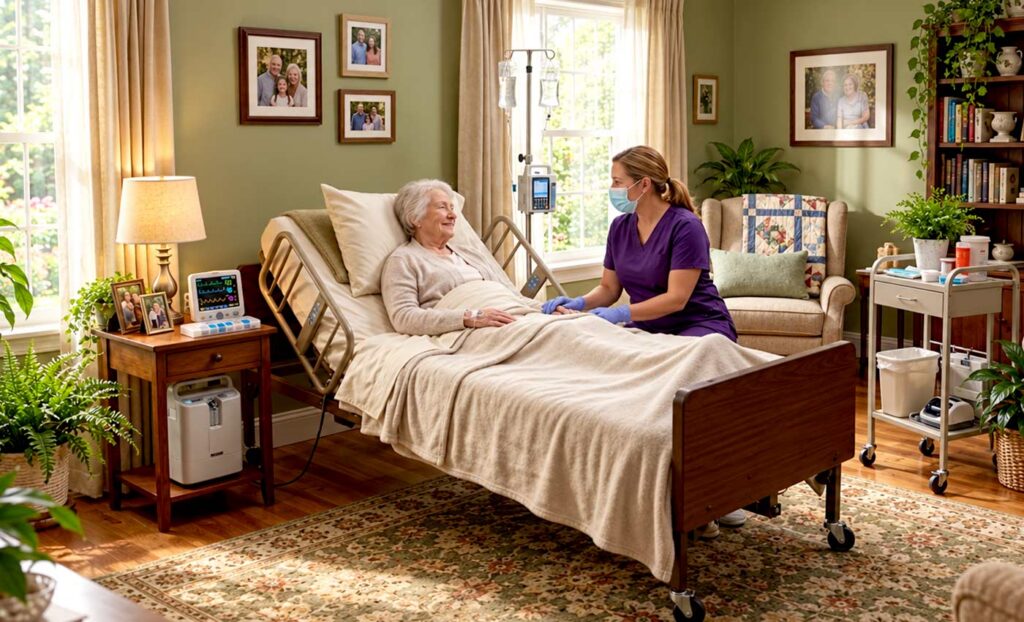

For people living with a serious or life-limiting illness, getting to frequent medical appointments can sometimes be difficult. Palliative care at home brings an added layer of support directly to the patient, helping address symptoms, care goals, and everyday concerns without requiring every conversation to happen in a clinic or hospital.
Knowing what to expect can make the process feel less unfamiliar for both patients and families.
What Is Home-Based Palliative Care?
Home-based palliative care provides specialized support for people living with advanced illness while allowing them to remain in the place where they feel most comfortable.
Palliative care focuses on improving quality of life and helping patients manage the physical, emotional, and practical challenges that may come with serious illness.
Depending on a patient’s needs, support may include:
- Managing pain and other symptoms
- Reviewing medications
- Helping patients understand treatment choices
- Discussing personal goals and priorities
- Coordinating care among multiple healthcare providers
- Providing support and guidance for caregivers
- Connecting families with community resources
Palliative Care Does Not Replace Your Doctors
One common concern is whether starting palliative care means leaving an existing physician or stopping treatment. In most cases, it does not.
Palliative care is an additional layer of support that works alongside a patient’s primary care provider, specialists, and other members of the healthcare team.
Patients may continue receiving treatments and therapies for their illness while also benefiting from palliative care.
What Happens During the First Visit?
The first palliative care visit is an opportunity for the care team to learn more about the patient as a whole person, not only their diagnosis.
The conversation may include questions about:
- Current symptoms
- Medications and treatments
- Recent hospital or emergency room visits
- Daily activities and mobility
- Appetite and sleep
- Emotional wellbeing
- Caregiving needs
- Personal goals and priorities
- Concerns about what may happen in the future
Patients and family members should also feel free to bring their own questions. The first visit is meant to help everyone better understand what support may be most useful.
How Palliative Care Helps Manage Symptoms
Symptoms related to serious illness can interfere with sleep, mobility, appetite, independence, and everyday quality of life.
Palliative care clinicians are experienced in helping manage symptoms associated with advanced illness, which may include:
- Pain
- Shortness of breath
- Anxiety or depression
- Loss of appetite
- Agitation
- Fatigue or weakness
The palliative care team may review medications, recommend strategies for managing symptoms, and communicate with other healthcare providers when changes to the care plan should be considered.
Care That Reflects What Matters to You
Living with serious illness often involves difficult choices. A treatment may offer certain medical benefits while also affecting comfort, independence, energy, or the ability to participate in meaningful activities.
Palliative care gives patients and families space to talk about those priorities.
Questions may include:
- What is most important to you right now?
- What activities do you want to continue doing?
- What symptoms are affecting your life the most?
- What are you hoping treatment will accomplish?
- What worries you most about your illness?
These conversations can help make sure medical decisions reflect the patient’s values and goals.
Support for Family Caregivers
When someone is seriously ill, family members often become an essential part of the care team. They may help with medications, transportation, meals, appointments, mobility, and communication with healthcare providers.
A home-based palliative care team can help caregivers better understand what is happening and what they can do to help.
Caregiver support may include:
- Education about symptoms and changes to watch for
- Guidance about medications and care routines
- Help communicating concerns to healthcare providers
- Emotional support
- Connections to social services and community resources
- Planning for future care needs
Who Is Part of a Palliative Care Team?
Palliative care is often interdisciplinary, meaning professionals from different areas work together to address a patient’s needs.
Depending on the program and individual care plan, the team may include:
- Physicians
- Nurse practitioners or physician assistants
- Nurse navigators
- Social workers
- Other healthcare professionals involved in the patient’s care
The team also communicates with the patient’s existing doctors and specialists to help keep care coordinated.
How Often Does the Palliative Care Team Visit?
The frequency of visits depends on each patient’s individual needs and care plan.
Some patients may need more frequent follow-up during periods when symptoms are changing, while others may need periodic visits to review medications, discuss treatment decisions, or address new concerns.
Telehealth may also be used in some situations to make follow-up care more convenient.
How to Prepare for a Home Palliative Care Visit
A little preparation can help patients and families make the most of each visit.
Before the care team arrives, consider gathering:
- A current medication list
- Names and contact information for doctors and specialists
- Recent hospital or emergency room information
- A list of symptoms or recent changes
- Questions you want to discuss
- Advance directives or other healthcare planning documents, if available
It may also be helpful for the primary family caregiver or another trusted person to participate in the visit.
When Should You Call the Palliative Care Team?
You do not necessarily need to wait for the next scheduled visit if something changes.
Contact the care team if you have questions or concerns about issues such as:
- New or worsening symptoms
- Pain that is becoming harder to control
- Changes in appetite or ability to eat
- Increasing shortness of breath
- Medication concerns or side effects
- Changes in mood, behavior, or alertness
- Increasing difficulty with daily activities
- Questions about treatment decisions or future care
The care team can help determine what steps may be appropriate and whether additional medical evaluation is needed.
Is Home-Based Palliative Care the Same as Hospice?
No. Palliative care and hospice care share a focus on comfort and quality of life, but they are not the same type of care.
Palliative care may be appropriate earlier in the course of a serious illness and can often be provided while a patient continues treatment.
Hospice care is designed specifically for people approaching the end of life who meet hospice eligibility requirements and whose care has shifted toward comfort rather than curative treatment.
If you are unsure which type of care is appropriate, a healthcare provider can help you understand the differences and discuss your options.
The Benefits of Receiving Care at Home
For many patients, home is where they feel most comfortable. Home-based palliative care can reduce the need to travel for every consultation while giving the care team an opportunity to understand the patient’s everyday environment.
Receiving care at home may also make it easier for family members and caregivers to participate in conversations about symptoms, medications, and future planning.
Home-Based Palliative Care from Transitions LifeCare
Transitions LifeCare provides palliative care in patients’ homes as well as hospitals, assisted living communities, skilled nursing facilities, and other care settings.
Transitions PalliativeCare works alongside a patient’s existing medical team and may include physicians and advanced practice providers, social workers, and nurse navigators. Patients may continue seeing their regular healthcare providers and receiving treatment while receiving palliative care.
To learn more, visit the Palliative Care page or call 919-828-0890.